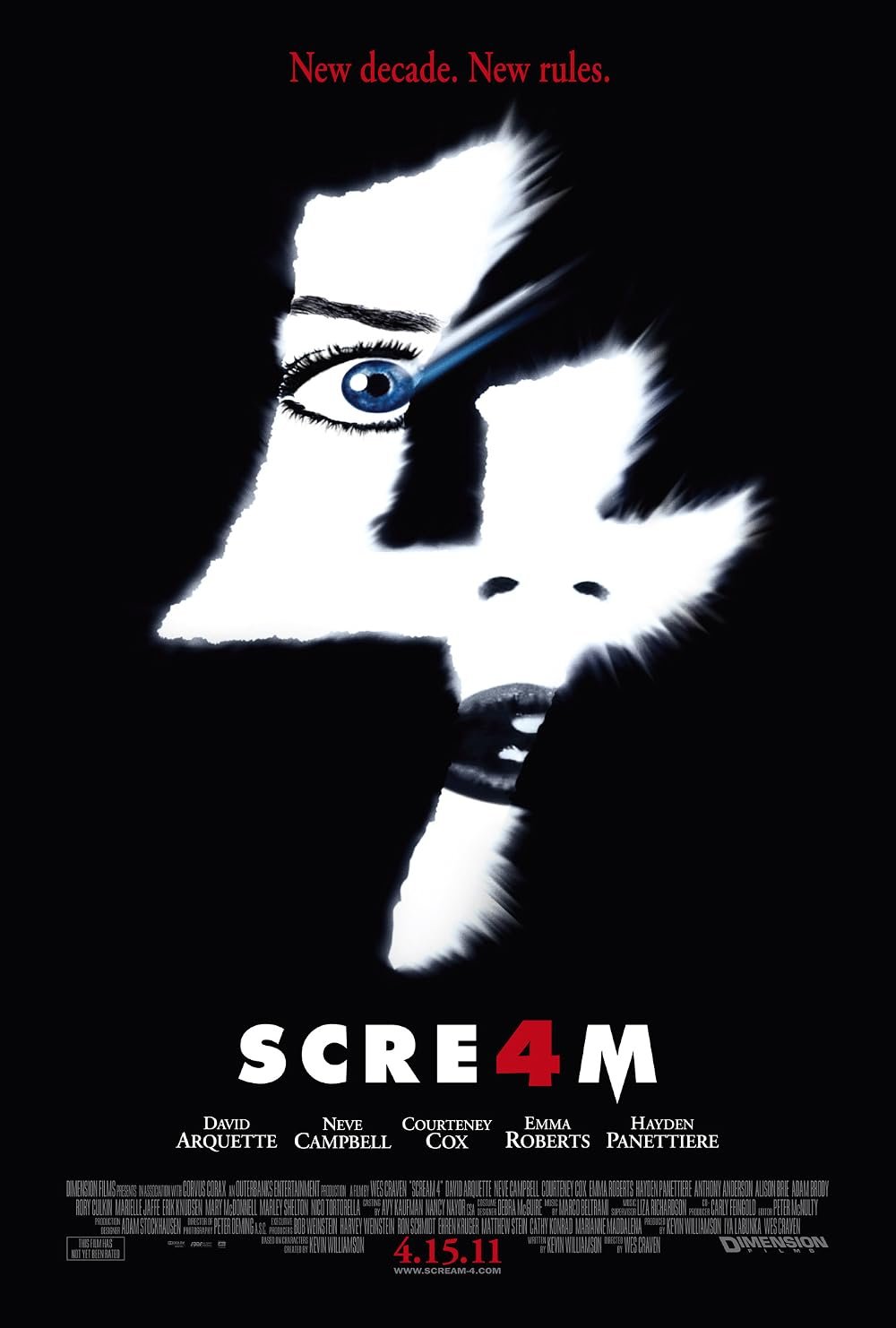
For Day 20 of The Bark Knight’s 31 Days of Halloween, we’re celebrating Ghostface with Scream 4 (2011), a sequel that occupies an interesting place in one of horror’s most consistently entertaining franchises.
Released eleven years after Scream 3 and eleven years before the fifth installment, the film marked Wes Craven’s fourth and final time directing a Scream movie before his death in 2015. It also reunited him with Kevin Williamson, who wrote the first two installments but sat out the third.
Looking back, Scream 4 feels like something of a bridge between the original trilogy and the newer generation of films. Despite its strange place in the series, I still think it’s one of the stronger entries.
Ghostface Returns to Woodsboro
The story picks up roughly fifteen years after the original Scream, with Sidney Prescott returning to Woodsboro to promote her new book about surviving the traumatic events of her past.
Naturally, her homecoming coincides with the emergence of another Ghostface killer, this time targeting a new group of teenagers.
The returning trio of Sidney, Gale, and Dewey remains central to the story, and by this point, they’ve really become the heart of the franchise. Their relationships and shared history give these movies a continuity that extends beyond the mask that connects them.
The new cast is also excellent though. Emma Roberts and Rory Culkin bring a whole lot of personality to their friend group, while seasoned day players like Adam Brody, Anthony Anderson, and Marley Shelton round out a great supporting cast.
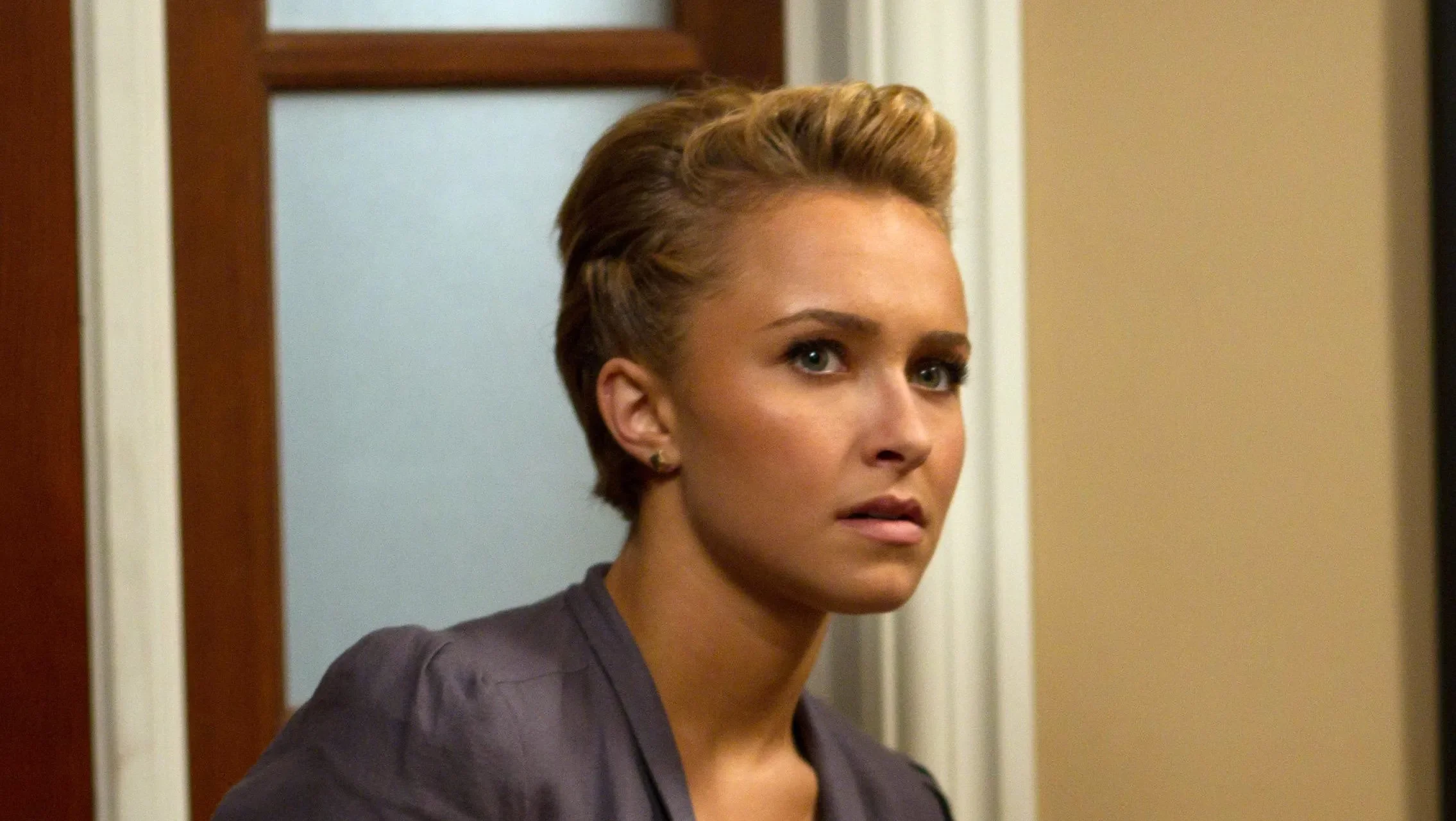
But, for me, Hayden Panettiere is the standout of the movie as Kirby Reed. She brings a great combination of confidence, humor, and horror movie knowledge to the role, making Kirby one of the most memorable additions to the franchise.
Her passing earlier this year makes revisiting Scream 4 particularly bittersweet. I was pumped when the filmmakers brought Kirby back in Scream VI, giving her a triumphant return and a place in the franchise beyond this one movie. Knowing that her character gets to live on in the Scream universe is a small comfort, even if we’ll never get to see where Panettiere herself might have taken the role next.
What I appreciate most is that the movie doesn’t feel like it’s simply repeating the original. The characters have evolved, the world around them has grown, and their reactions to another series of murders feel consistent with everything they’ve experienced.
For a fourth installment in a slasher franchise, that’s no small feat.
Remakes and Social Media in the Early 2010’s
One of the defining characteristics of the Scream franchise has always been its ability to comment on the horror genre while participating in it.
The original film famously dissected the rules of slasher movies. By the time Scream 4 arrived in 2011, remakes and reboots had become a major part of the horror landscape, and the film uses that trend as the foundation for much of its commentary.
There are deliberate parallels to the original Scream, from the younger cast to the familiar Woodsboro setting, but the movie is also interested in how the rules have changed.
That self-awareness is part of what makes the series work, although I do think the opening sequence pushes things a bit too far. It’s probably one of the more out-there introductions in the franchise, and it comes just a little too close to the kind of self-parody that these movies have usually managed to avoid.
What I really find interesting on rewatch, though, is how the film captures social media and teenage culture at a turning point.
In 2011, Facebook and YouTube were already enormously popular, smartphones were becoming more common, and Instagram was still relatively new. People were beginning to document their lives online in ways that would have seemed unusual only a few years earlier, but we hadn’t yet reached the point where seemingly everyone was filming everything.
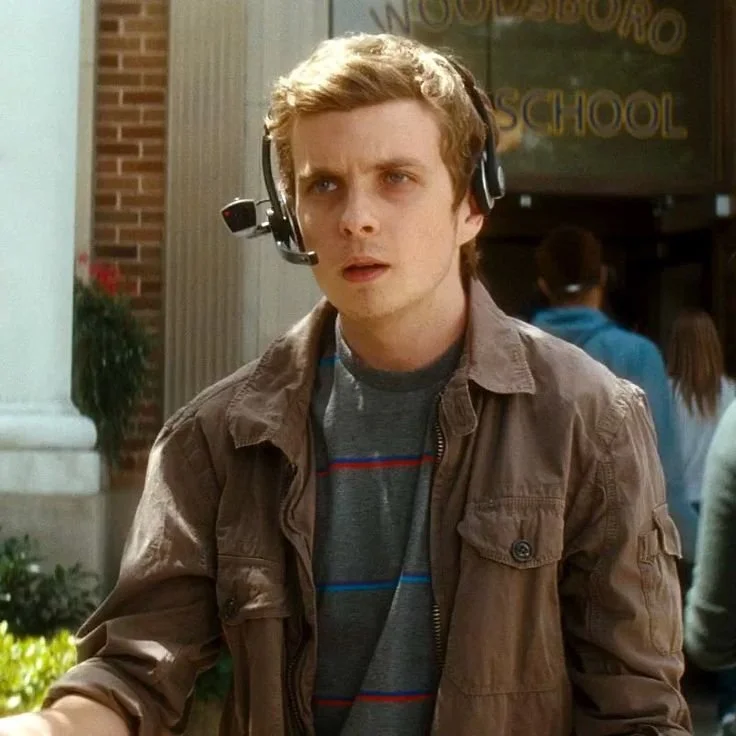
You can see that transition throughout Scream 4. Characters are recording videos, sharing information, and treating online attention as something worth pursuing, but these behaviors haven’t completely taken over their everyday lives.
“Scream 4 captures a recognizable version of modern social media culture, just before it became nearly unavoidable.”
There’s even a moment when a character suggests that people will eventually record and document practically their entire high school experience. At the time, that probably sounded exaggerated, but fifteen years later, it’s difficult to argue that they were wrong.
Today, we’re accustomed to people filming themselves in public, documenting mundane activities like eating, getting dressed, and driving, and building entire careers around their online identities. Influencers existed in 2011, but the idea of becoming one hadn’t yet become the widespread aspiration it is today, for better or worse.
That’s what makes revisiting Scream 4 so interesting. It captures a moment when social media was beginning to reshape how people presented themselves to the world, while also anticipating just how far that transformation would go, and then builds that entire idea into its plot in a way that doesn’t feel forced or preachy.
It’s another example of how Scream has managed to reflect the culture surrounding each installment rather than simply relying on familiar slasher conventions, but it also speaks to Wes Craven’s ability to weave social commentary into his horror films. Just look at The People Under the Stairs (1991), which uses its bizarre, nightmarish story to explore class inequality, exploitation, and the displacement of lower-income communities.
Craven had a knack for making these themes part of the horror itself, rather than simply using his movies as a platform to talk about them.
The Odd One Out in the Scream Franchise
Something I’ve always found interesting about Scream 4 is how it exists between two distinct eras of the franchise.
The original three films form a relatively cohesive trilogy, while Scream (2022) and Scream VI (2023) introduce a new central cast and direction.
That leaves Scream 4 in a somewhat unusual position. It isn’t really part of either group, but it fits surprisingly well alongside both.
If I had to place it firmly in one camp, though, I’d definitely put it with the original trilogy. With its continued focus on the original cast, Wes Craven’s direction, and Kevin Williamson’s writing, much of the creative foundation that defined the earlier films remains intact.
At the same time, it introduces themes and ideas that would become even more prominent in the newer installments, making it a natural transition between the two eras. Rather than resetting everything, the film acknowledges what came before and builds upon it.
I think that’s one of the reasons the franchise has remained as consistently enjoyable as it has. Even after multiple sequels, it still feels like there’s an actual world and history connecting the movies.
While the series certainly enjoys poking fun at itself, Scream 4 never completely loses sight of what makes Ghostface an effective horror villain.
How Well Does Scream 4 Hold Up?
I don’t have many significant complaints about Scream 4. It’s entertaining, the cast works well together, and the story delivers the kind of mystery and suspense I’ve come to expect from this franchise.
It also has a very strong climax that includes one of the best killer reveals of the entire franchise. I won’t spoil it here, but I wouldn’t be surprised if we eventually see a connection to these events explored in a future installment.
There is, however, one visual issue that has bothered me since the movie was released: The entire film has this strange, glossy haze over the image. Bright areas seem to glow, and at times, everything looks like it has an artificial aura around it. I’ve always found it distracting, and it’s easily my biggest complaint about the movie’s presentation.
Interestingly, Lionsgate Limited released Scream 4 on 4K UHD Steelbook in 2026, and the new presentation appears to tone down some of that distracting glow. I have mixed feelings about the change. On one hand, I generally believe a restoration should respect the filmmaker’s original artistic choices, even when I don’t particularly like them. On the other hand, this is the one aspect of Scream 4 I’ve always wished looked different.
Of course, I own the steelbook anyway.
Oddly enough, the original visual treatment seems to bother me a little less every time I revisit the film. Maybe after another few viewings, I’ll stop noticing it altogether.
Beyond that, Scream 4 has aged remarkably well, in my opinion. Its commentary on remakes and social media remain relevant, the returning characters are handled well, and the new cast brings enough personality for the film to feel fresh.
I’d even go so far as to say I prefer this one to Scream (2022), Scream VI, and the recent Scream 7, which featured the return of Kevin Williamson, this time in the director’s chair instead of the writer’s.
If you haven’t seen Scream 4 in a while, I’d absolutely recommend giving it another watch. It’s a strong sequel that deserves more recognition than its unusual place in the franchise sometimes allows.
Join me next time for the 31 Days of Halloween’s Horror Comedy Day.
🎃
Previous Day: Day 19 - Mandrake (2022): Witchcraft, Folklore, and Dark Secrets.
Click here to view all 31 Days of Halloween articles.
Enjoyed the blog? Join the newsletter for monthly movie picks and new releases.