There was a time when watching a movie at home involved considerably more effort than opening an app and pressing play. You had to find the right movie, make sure you had the right equipment, and sometimes rewind an entire video cassette before you could even begin watching it.
If you wanted to record something on television, you had to know when it was airing. If you missed it, there was no guarantee you’d get another chance anytime soon. If the picture started rolling or strange, fuzzy lines appeared across the screen, you might find yourself fiddling with the VCRs tracking controls to get things back to normal.
Growing up in the VHS era, these were just ordinary parts of watching movies. We didn’t necessarily think of them as inconveniences because, for a long time, it was just how things worked.
Today, I can watch a 4K Blu-ray on an OLED television with a level of picture quality that would’ve seemed unimaginable when I was a kid. I certainly wouldn’t trade those advancements away.
But, looking back, there is something I miss about the experience of watching and collecting movies during those years. The video stores, the anticipation surrounding a new release, the technology itself, and even some of its frustrating limitations all became part of my memories of that era.
Considering how much time I spent watching and collecting VHS tapes, I have quite a few of those memories at this point.
The Kid with a Thousand VHS Tapes
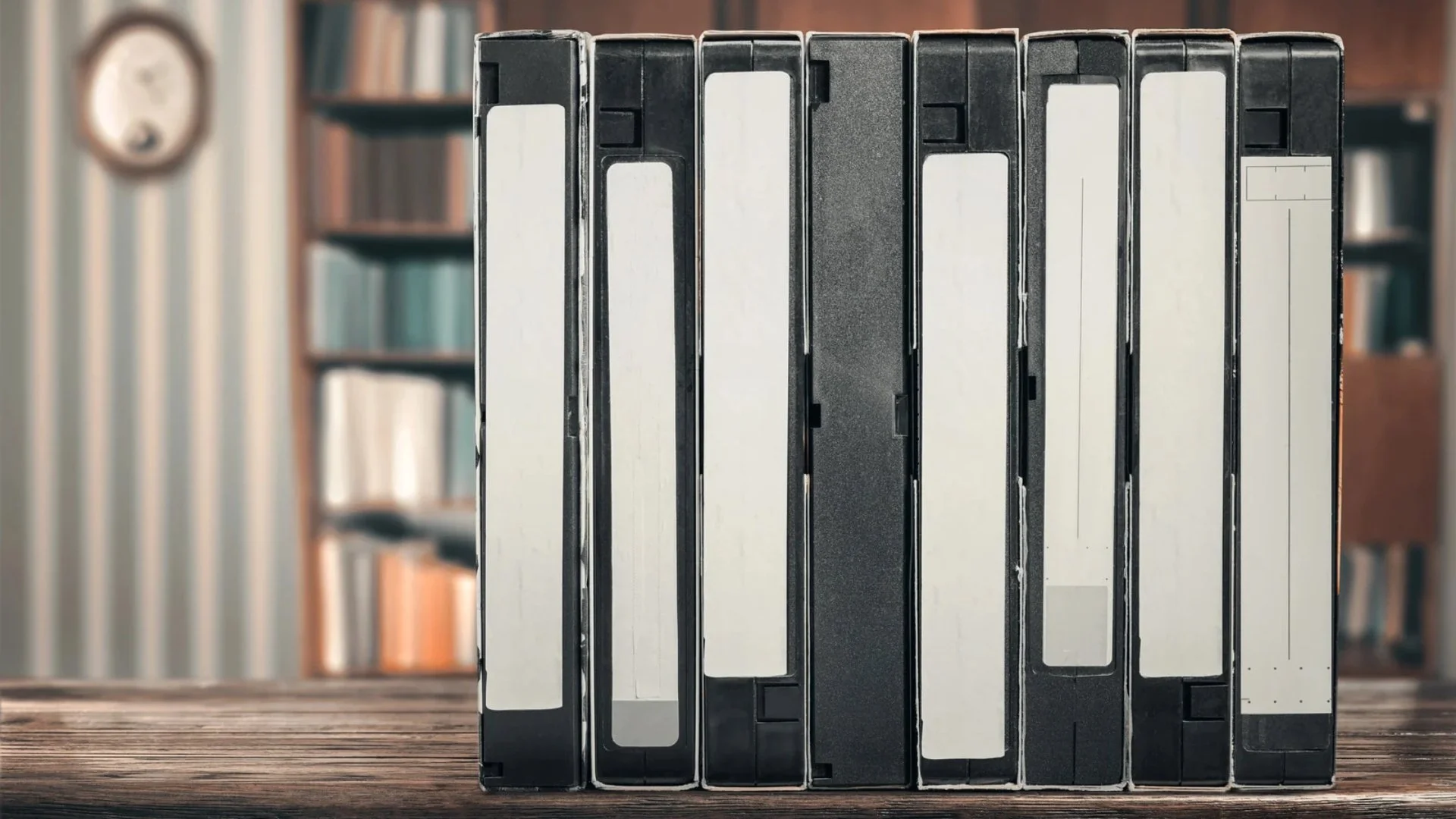
When I say I grew up with VHS, I don’t mean that I had a handful of Disney movies sitting beneath the TV. What I mean is that I had more VHS tapes than anyone else I knew.
My collection easily included over 600 tapes recorded from television, along with a separate collection of over 200 commercially released movies. Then there were random tapes of home videos, music videos, and collectibles that came with board games or ones that were sent for saving enough cereal proofs of purchase. All together, the library easily reached into thousands of movies.
The recorded tapes were a different beast altogether though.
My family maintained a physical catalog book, assigning numbers to each cassette and listing the movies recorded on it. Since many of those tapes contained two, three, or sometimes even four movies, the actual number of films in my collection was considerably higher than the number of cassettes.
If I wanted to watch something, I’d look it up in the catalog, find the corresponding number, and track down the tape.
It was basically our own movie database, long before I had any idea what a digital movie database actually was.
My collection was so extensive that whenever we read a book in school and the teacher wanted to show the movie adaptation, I was usually the person asked to bring it in.
Looking back, it’s funny to think that I was effectively running a small movie library our of my house.
While those hundreds of home-recorded tapes are no longer part of my collection, I still have more than 200 of the purchased VHS tapes today. They’ve followed me from Perry, NY, to Rochester, NY, and eventually to Virginia Beach, VA.
I’ll come back to those later.
The Lost Art of Recording Television
Before streaming, DVRs, and on-demand libraries, recording television was an essential part of home entertainment.
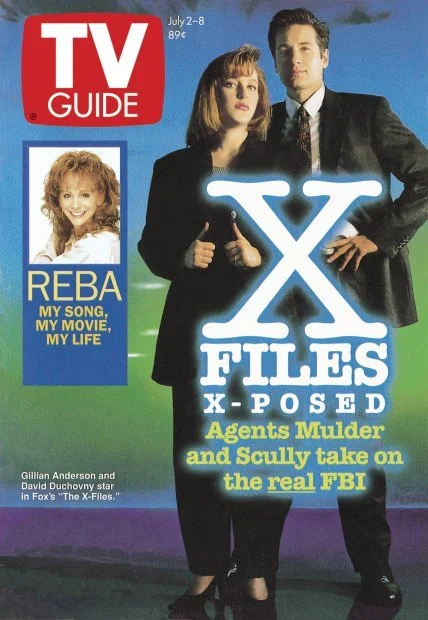
If a movie you wanted to see was airing on television, you had to plan for it. That meant checking TV Guide, a small weekly magazine that listed what was airing on television, organized by channel, day, and time. You could flip through the listings to see what movies or shows were coming up, and highlight the ones you didn’t want to miss.
There were also television listings in the newspaper, and eventually, cable providers introduced dedicated guide channels that continuously scrolled through upcoming programs.
Could you imagine that?
If you wanted to know what was on, your choices were consulting a magazine, flipping through channels, or watching a never-ending scroll of television listings. Sometimes you’d even have to wait for the entire scroll to start over just to double-check when something was airing.
Meanwhile, there were entire channels devoted to commercials. They were just selling blenders, ovens, tools, and whatever else they could convince you to buy. Nonstop. All. The. Time.
Eventually, interactive programming guides became available through cable boxes and televisions, but that took time.
Then, you had to make sure there was a blank tape available.
Recording a movie wasn’t always as straightforward as pressing a button either. You had to make sure the VCR was set to the correct channel, the tape had enough room, and the recording speed was appropriate (although you’d usually only have to set this once).
If you weren’t going to be home, programming the VCR introduced an entirely new set of challenges.
There was a reason the flashing 12:00 on a VCR became such a familiar joke. Setting the clock and programming a recording could be surprisingly frustrating, especially when every manufacturer seemed to have its own approach.
If something went wrong? You might discover hours later, or the next morning for those overnight recording attempts, that you’d recorded nothing at all.
Maybe it was the wrong channel or the wrong time. Maybe you’d programmed the VCR to stop at 2 am, but the movie actually finished at 2:05 am. In more cases than not, you captured nothing at all.
Admittedly, I don’t think my family ever successfully set the VCR to record a movie when we weren’t there.
If you were going to be successful, you had to sit there, watch the movie, hit the record button yourself, pause during commercial breaks so you didn’t have to fast-forward through them later (and to save that precious, limited tape space), and stop it when it finished.
Boom. It worked. You now had access to a movie that might not air again for months. You could add it to your collection and watch it whenever you wanted.
But, recording on television wasn’t always just about building the collection. Sometimes it was about making sure you didn’t miss something.
Maybe it was a local musical being broadcast, or you learned that a family member was going to appear on a news program, or maybe it was about a TV series you were trying to keep up with.
I remember plenty of occasions when I had a chorus concert, a night out at the drive-in, or some other family outing that conflicted with the latest episode of The X-Files. Fortunately, my grandfather was usually recording it.
On Saturdays, when my dad would pick me up and take me to my grandparents’ house, I could either catch up on the episode there or borrow my grandfather’s tape to take home, watch, and bring back the following weekend.
That was a pretty common part of the VHS experience. Friends and family could record programs for one another, lend the tapes back and forth, and help each other keep up with shows when life got in the way.
It wasn’t as convenient as opening a streaming app, but there was something nice about how easily you could share what you’d recorded. You didn’t need to worry about which streaming service someone subscribed to or whether a title was available in their region. You just handed them the tape.
Of course, television broadcasts came with their own compromises. Commercial breaks interrupted the movie, and depending on the channel, profanity, violence, and nudity might be edited or removed entirely. Sometimes scenes were even shortened to fit the available broadcast window.
But, there was something strangely satisfying about getting everything right and being able to share recordings with those around you.
Even the way someone recorded a program could tell its own story.
You’d often hear things like, “Oh, sorry, I was in the kitchen during this part and didn’t get back in time to unpause it.”
Or, “I had it paused for more than three minutes, and the recording stopped.”
Yeah, that was a thing.
How Many Movies Can You Fit on One Tape?
As a kit, my biggest concern when recording movies was figuring out how many I could squeeze onto a single VHS tape. If I could fit three or four movies onto one cassette, that meant fewer tapes to buy and less space needed to store them
VHS tapes came in different lengths, which determined how much tape was physically inside the cassette. One of the most common was the T-120.
VCRs offered three common recording speeds, each balancing recording time against picture quality. The slower the recording speed, the more footage you could fit onto a cassette, but ath the expense of picture quality.
| Recording Speed | Recording Time (T-120) | Picture Quality |
|---|---|---|
| Standard Play (SP) | 2 hours | Best |
| Long Play (LP) | 4 hours | Reduced |
| Extended/Super Long Play (EP/SLP) | 6 hours | Lowest |
Recording times based on a standard NTSC T-120 VHS cassette.
At the time, I wasn’t particularly concerned with picture quality. I didn’t realize how much quality I was sacrificing by squeezing more movies onto each tape, and I doubt I would have care much even if I had. It wasn’t until televisions started being marketed with resolutions like 720p and 1080p that I began thinking more seriously about how picture quality was measured. As far as I was concerned, the more movies I had, the better.
I doubt I was alone either. Msot people probably weren’t thinking in terms of recording speeds or picture quality. They were more concerned with the convenience of watching their favorite movies whenever they wanted.
In that sense, not much has changed. treaming services often deliver lower video and audio quality than their physical media counterparts, but they’re considerably more convenient. Many viewers probably aren’t even aware that picture quality and bitrates can vary between streaming platforms.
It’s funny to think about now, considering how much attention I pay to picture quality when purchasing Blu-rays and 4K releases.
Commercially released VHS tapes weren’t necessarily recorded at the same speed, either. Some distributors used slower recording speeds to fit longer movies onto a single cassette, while others split them across multiple tapes.
I still have my two-tape copy of Titanic (1997), which is a perfect reminder of how different things were.
Today, we can fit a movie that long onto a single optical disc with vastly superior picture and sound quality. Back then, having to switch tapes halfway through a movie was simply part of the experience.
CRT Televisions, Tracking, and Other Relics of a Bygone Era
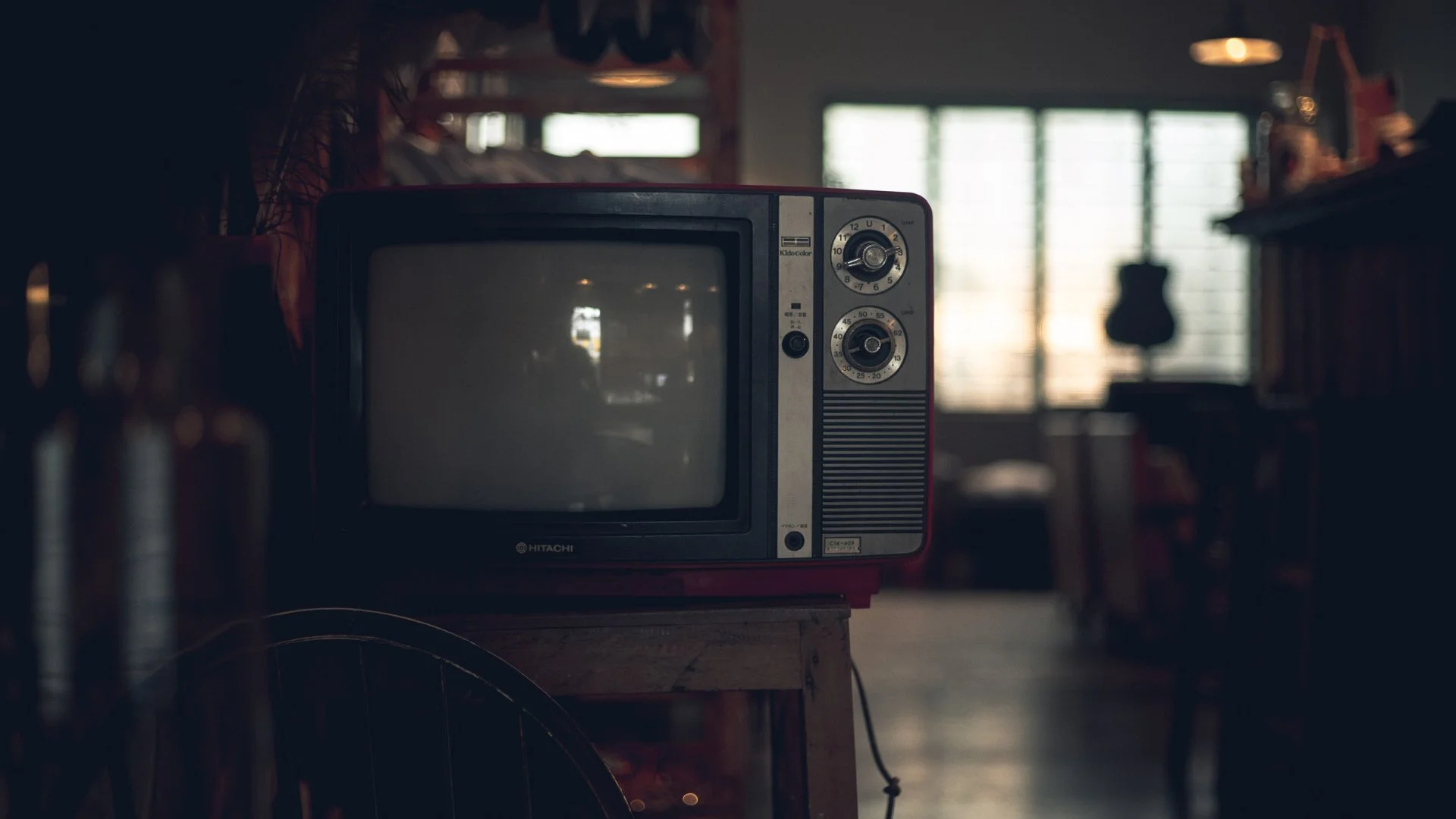
Of course, the VHS experience wasn’t limited to the tapes themselves. The televisions and VCRs we watched them on were just as much a part of it.
Before flat-screen TVs became commonplace, most of us watched movies on bulky CRT televisions. These things were enormous, heavy, and sometimes required two people just to move them. Seriously, when my mother sold my childhood home back in the early 2020s, it still had one in the upstairs bedroom because it was too heavy for us to move. I was lucky enough to get my first flat-screen, a 32-inch 720p Sony BRAVIA, the year before I left for college, so at least I had a much easier time moving my own television. It meant I could even take it home on visits too.
Despite all of that, CRT screens themselves were surprisingly small by today’s standards. For years and years, I watched movies on a 19-inch TV in my bedroom.
There was also something distinctly different about watching movies on those televisions. The curved glass screens, the familiar hum when you turned them on, and the occasional static electricity you could feel when touching the screen were all part of the experience. Even turning it one could involve waiting a moment for the picture to appear.
Watching a VHS tape also meant occasionally dealing with tracking problems. Tracking was a feature that helped the VCRs video heads follow the information recorded along the magnetic tape. When the tracking was off, you might find horizontal lines moving across the screen, a distorted picture, or a picture that seemed to jump or roll.
Fixing those problems wasn’t always convenient either. Earlier VCRs didn’t necessarily offer the automatic tracking features that became common on later models. Even when manual tracking controls were available, they weren’t always accessible from the remote control.
I remember sitting on the floor in front of the television, adjusting the tracking directly on the VCR while a movie was playing above me, trying to get the picture looking halfway decent.
Eventually, automatic tracking became more common, and some VCRs allowed you to make adjustments from the remote. For a while, though, getting a clear picture could mean physically getting up and fiddling with the machine.
Then there were the tapes themselves.
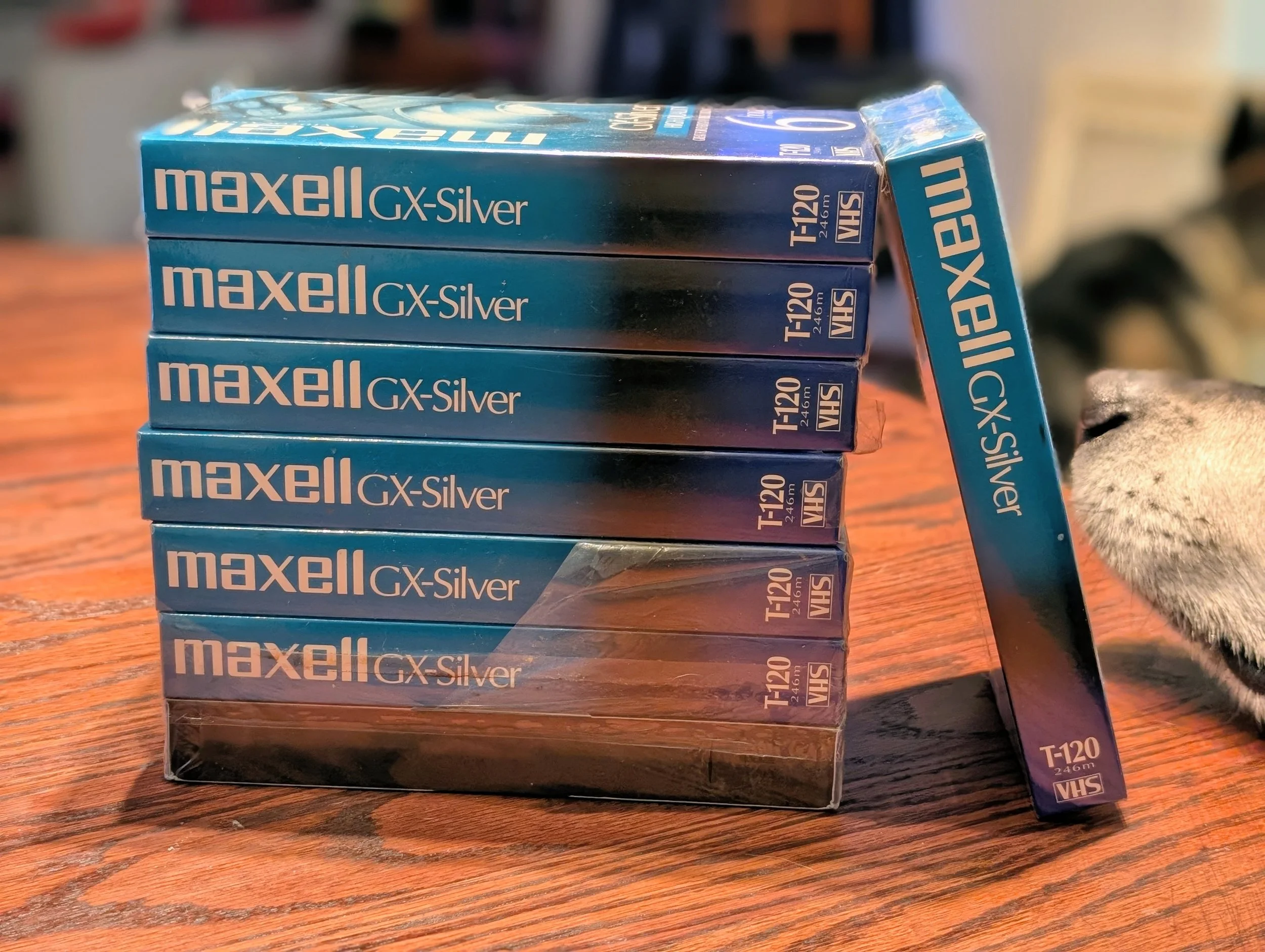
Actual unopened blank VHS tapes I still own.
After years of repeated viewings, recordings, and rewinding, some cassettes began showing their age. You might encounter a section of distorted video, a momentary burst of static, or a picture that briefly lost its stability.
There was also the occasional need to clean the VCRs video heads. This need would become clear when the picture quality started deteriorating across multiple tapes. When something went wrong you couldn’t fix yourself? There were plenty of local electronics repair shops that services VCRs, televisions, and other analog equipment.
And, of course, there was rewinding. Whether you were returning a rental that featured the classic “Be Kind, Rewind” sticker, or simply wanted to watch one of your own movies again, you couldn’t just jump back to the beginning. You had to wait for the tape to physically wind its way back through the cassete.
Some people, myself included, had dedicated VHS rewinders, which reduced wear and tear on the VCR and freed it up for other uses. It’s funny to think that an entire category of consumer electronics existed just the rewind videotapes.
Ironically, many of those visual imperfections have since become recognizable elements of nostalgia.
Today, filmmakers and online creators deliberately recreate VHS tracking lines, static, distorted audio, and other analog video effects to give their work a certain atmosphere.
Back then, we were usually just trying to make those problems go away.
The Video Store Was Part of the Experience
For a long time, renting a movie meant physically going somewhere to find and choose it.
Growing up in Perry, NY, the video store I remember best was a place called Video Fantasy. My family visited frequently, and throughout my childhood, I remember my friends and I riding our bikes there to rent movies or, eventually, video games.
It was a different time in many ways. As kids, we had a degree of freedom that doesn’t seem nearly as common today. We could hop on our bikes, head to the other side of town, browse the shelves, and come home with something to watch or play.
I still associate certain movies and posters with walking through Video Fantasy. I remember seeing the Scream movies, I Know What You Did Last Summer (1997), and the From Dusk Til Dawn films on the shelves. For some reason, the poster for Ticks (1993) has also stuck with me all these years.
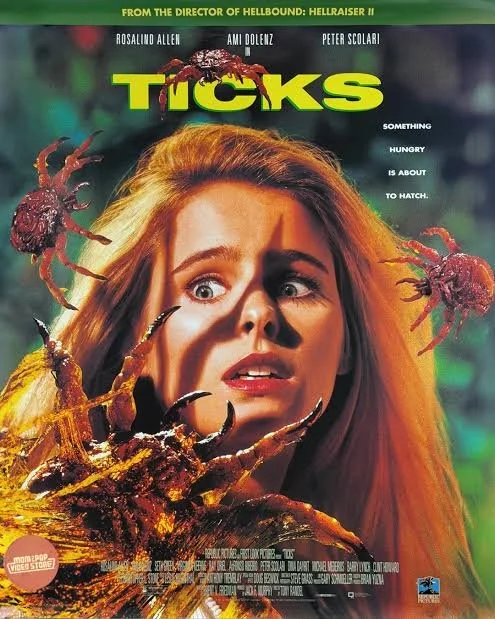
I eventually rented the From Dusk Til Dawn movies from Video Fantasy, working my way through them one at a time. Years later, I bought the DVD box set at Best Buy.
Of course, I didn’t necessarily watch every movie when I first discovered it. I remember eventually seeing I Know What You Did Last Summer at my uncle’s house one evening when my cousin happened to be watching it. That was a fairly common occurance when we visited, and I had similar experiences discovering films like Braveheart (1995) and Tombstone (1993).
Video Fantasy was where I became familiar with countless movies long before I actually watched them. Some I wouldn’t get around to watching until years later. Others, like Silent Night, Deadly Night (1984), I still haven’t seen. Looking back, I think those visits played a significant role in shaping my taste in film.
I also remember an experience at a video store in nearby Warsaw, NY. My friend and I were playing the original Silent Hill (1999) on Playstation at his dad’s apartment on main street when he came across a note in a video game magazine about the game’s inspiration coming from Jacob’s Ladder (1990). Naturally, we wanted to see the movie, so we walked down to the local video store to look for it. Sure enough, they had a copy.
Around that same time, we also walked to a showing of The Sixth Sense (1999) on a Friday night. It may have even been during the same visit. Those are the kinds of memories I associate with growing up in small towns, where going to the movies or renting one could be as simple as walking down the street.
Part of what made video stores so enjoyable was the opportunity to discover something you hadn’t planned on watching. You could spend half an hour looking through movies, reading the descriptions on the back of their cases, and trying to decide what was worth bringing home. Sometimes you knew exactly what you wanted. Other times, you had absolutely no idea until something caught your eye. For me, the cover art alone was often enough to make a movie seem worth renting, even when I knew absolutely nothing about it.
Obviously, the artwork wasn’t always an accurate representation of what you were getting. Some of those covers promised considerably more excitement than the movies themselves delivered, but since the movies were only a buck or two per night, it was worth the gamble. Besides, you couldn’t simply pull out your phone and watch a trailer, check reviews, or look up an entire filmography while standing in the aisle. Movie reviews were largely something you encountered in newspapers, magazines, or on television, and even then, you had to wonder whether a professional critic’s opinion would align with your own. Other than that, all you had was the cover, the description on the back, maybe a recommendation from someone working there, and whatever you may have heard from a friend or family member beforehand.
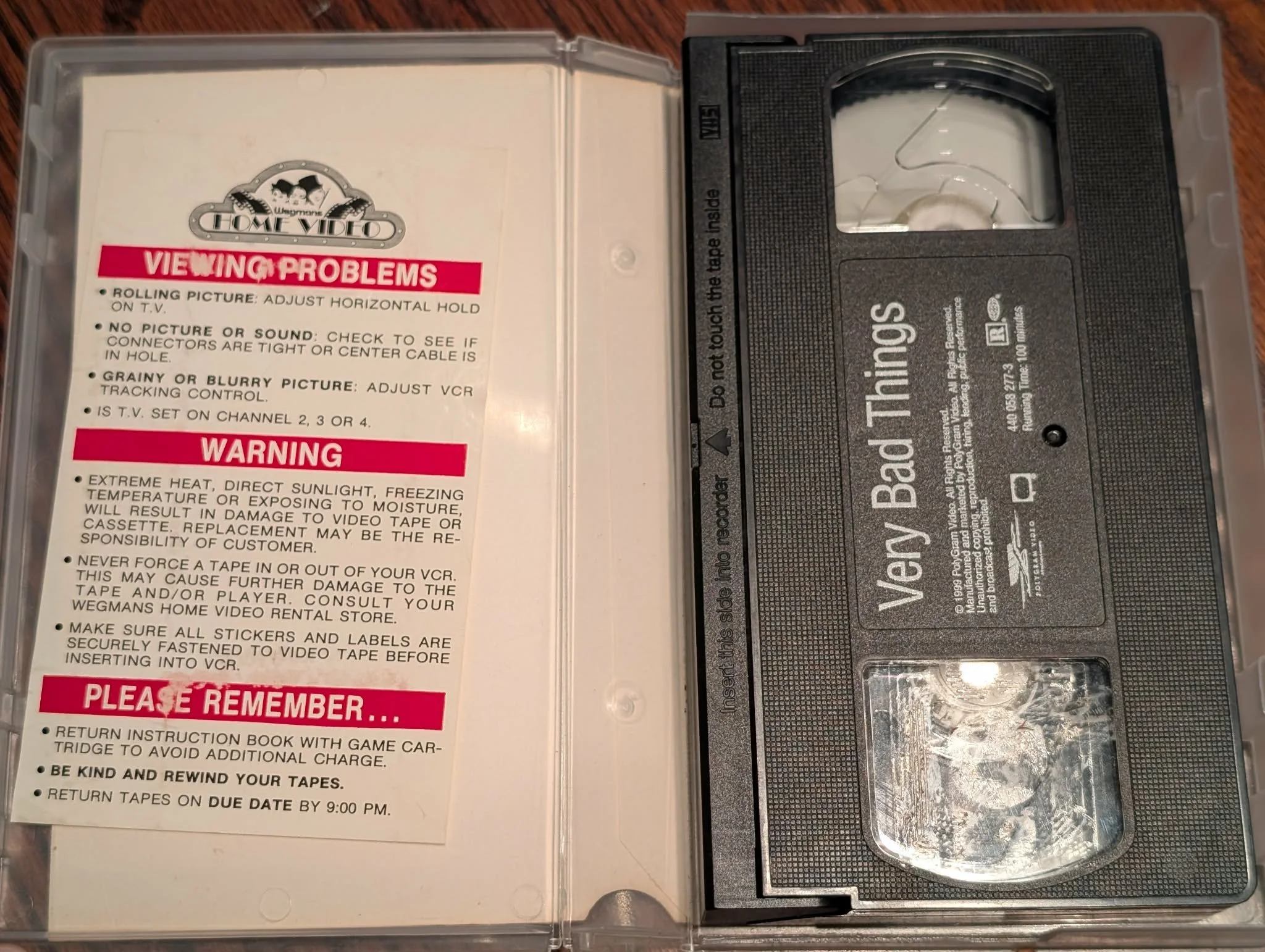
There was also the disappointment of discovering that the movie you wanted was already rented. Popular new releases could disappear from the shelves quickly, leaving you to choose something else or come back another day.
Once you finally made your selections, there was still the matter of getting them home, watching them before they were due back, and remembering to return them on time. Late fees were a very real consideration.
Independent video stores had their own personalities too. The layout, the selection, the employees, and even the way movies were organized could make one store feel entirely different from another.
Today, it’s easier than ever to browse massive libraries of movies without leaving the couch. There’s no denying the convenience of streaming, but I can’t help thinking about what we gave up along the way. We used to be able to walk down the street, rent a movie for a dollar or two, and enjoy the experience of discovering something new. Sure, there were late fees if you forgot to return it on time, but considering what some digital rentals cost today, it sometimes feels like the late fees are already baked into the price.
When Every Movie Release Was an Event
There was a time when seeing a movie required considerably more planning than it does today.
If you wanted to see something when it first came out, you generally had to go to the theater. There were no streaming premieres or digital rentals waiting for you at home, and movies could take months to make their way onto VHS.
For me, going to the movies was a huge part of growing up. I went constantly, whether it was with my family or, as I got older, with friends. I have so many memories associated with certain movies and theaters that it’s difficult to know where to begin.
I remember seeing Jurassic Park (1993) at the drive-in and going to see Forrest Gump (1994) in Warsaw, NY with my mother, sister, and grandmother. I even remember crying during the scene where Forrest’s mother passes away.
I also remember waiting in line at the theater in Geneseo, watching the clock, looking at the movie posters around us, and occasionally spotting someone we knew. There was something exciting about standing in line with everyone else, hanging out in the lobby while someone grabbed concessions or used the restroom before the movie. We’d wait for the doors to open, hoping to get good seats.
Then there was Titanic (1997). I saw that one three times in theaters, which wasn’t unusual at all at the time. This was the first theatrical phenomenon I can remember, with people going so far as to compete to see who could watch it the most time.
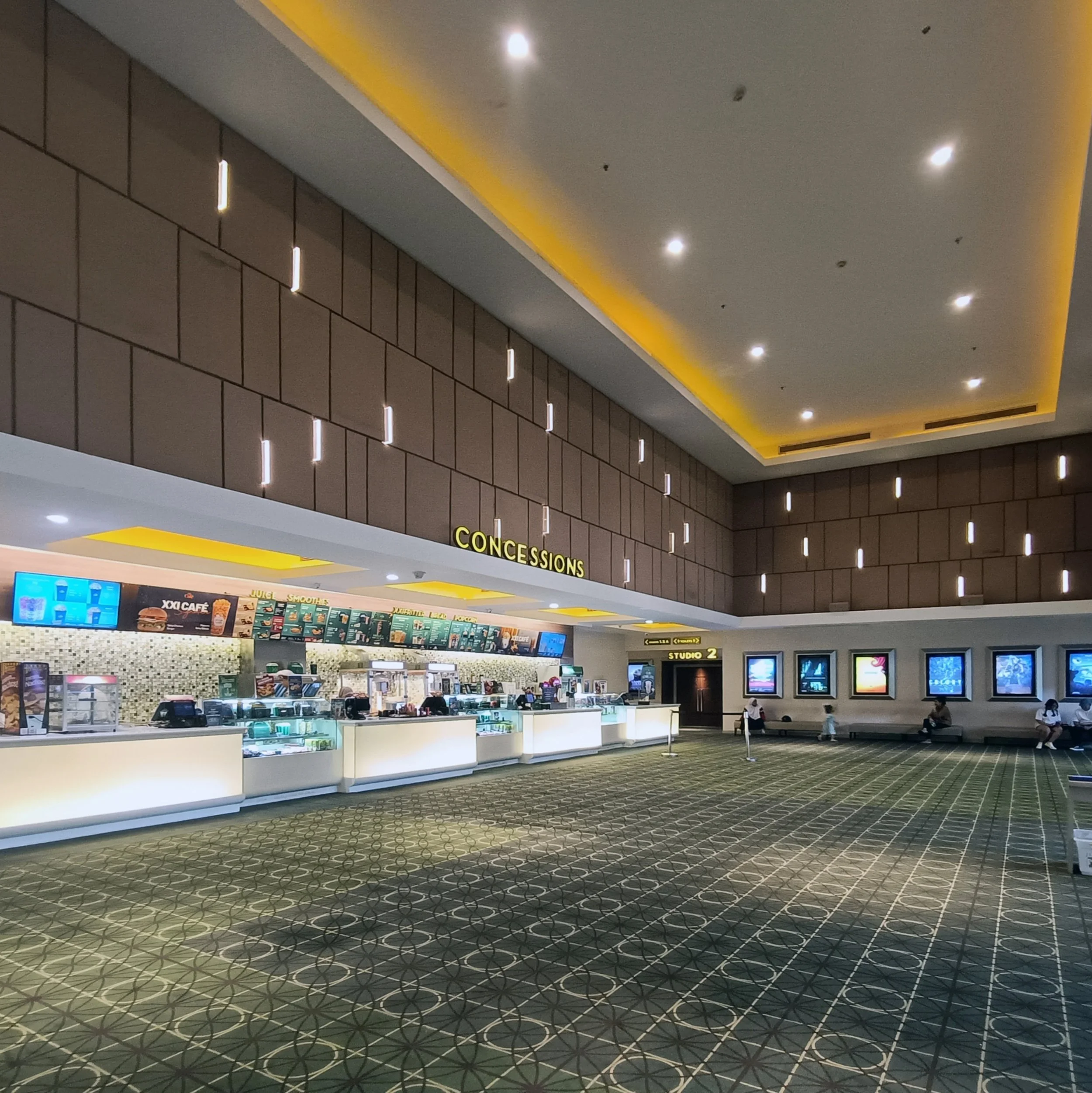
For a while, trips to Rochester, NY were reserved for special releases. It was around a 45-minute drive from Perry, but that’s where the nicer theaters and IMAX screens were. I remember seeing each of the Lord of the Rings movies three times in Rochester.
Then, there were movie times. Figuring out when a movie was playing wasn’t always as simple as pulling up a website.
I recall sitting at my grandparents’ house with my family, pulling out the phone book and calling the local movie theater to hear their showtimes. You’d listen to an automated recording as it went through the movies and their scheduled times, sometimes having to wait for the entire message to repeat if you missed something.
The other option was checking the local newspaper and shuffling to the movie section. I think people today underestimate how important newspapers were in everyday life before the internet became the primary home for everything. They weren’t simply a source of news. They were how you found out what was happening in your community, where to go, and when things started.
As I got older, going to the movies became one of the things my friends and I did most often. I have a friend, Adam, who a significant portion of my memories of our childhood involve going to the theater together. By the time we were a teenagers, the internet had started changing how we discovered upcoming movies. We went from dial-up connections to faster services like Roadrunner and DSL, and suddenly we could watch trailers on-demand.
I remember watching the trailer for Jason X (2001) over and over again because it featured Drowning Pool’s “Bodies” and made the movie look so damn cool.
Unfortunately, that was also the first time I remember learning that sometimes the trailer was much better than the movie itself. I remember talking about that exact topic during the long drive home from Rochester as my mother drove us from another trip to the theater.
My mother was there for a lot of those outings. She was an avid movie fan herself, and she still likes to remind me of how, as my friends and I got older, we eventually stopped wanting to sit with her at the theater. We’d go find our own seats, establishing a little independence even though she’d been the one to bring us. She had a good sense of humor about the whole thing.
There were plenty of disappointments too. I remember leaving The Matrix Reloaded (2003) frustrated by its ending, knowing we’d need to wait for another movie to release to find our how the story concluded. That was another drive-in outing.
Other experience have stuck with me for entirely different reasons. I remember going to see Indiana Jones and the Kingdom of the Crystal Skull (2008) with my dad and grandfather on Father’s Day. I remember being absolutely blown away by The Dark Knight (2008) at the drive-in with a group of friends.
The list goes on and on.
There was something about the anticipation surrounding a theatrical release that carried over into the home video experience too. If you missed a movie in theaters, you might spend upwards of six months waiting for it to arrive at the video store. Even after it was released, there was no guarantee that a copy would be readily available when you went looking for it.
Premium cable channels like HBO, Cinemax, and Showtime offered another opportunity to catch movies you might have missed. You might even get lucky enough to stumble upon some gems during one of their free preview weekends. Basic cable and broadcast television were another options, although those would often come way later, were often edited for television, and were loaded with commercials.
Today, many movies arrive on digital platforms relatively quickly after their theatrical releases, and some are available to stream almost immediately. There’s certainly something to be said for that convenience, but when I think back on all those trips to the movies, I don’t just remember what was playing. I remember the rituals surrounding each trip, who I went with, the theaters we visited, the conversations on the drive home, and the excitement of seeing something we’d been looking forward to for months. I even remember the conversations at school about it the next week.
Going to the movies was as much a part of growing up for me as watching them at home.
The Tapes That Remain
Despite all of the changes in how we watch movies, I still have a substantial VHS collection, with more than 200 commercially released tapes that I’ve held onto over the years.
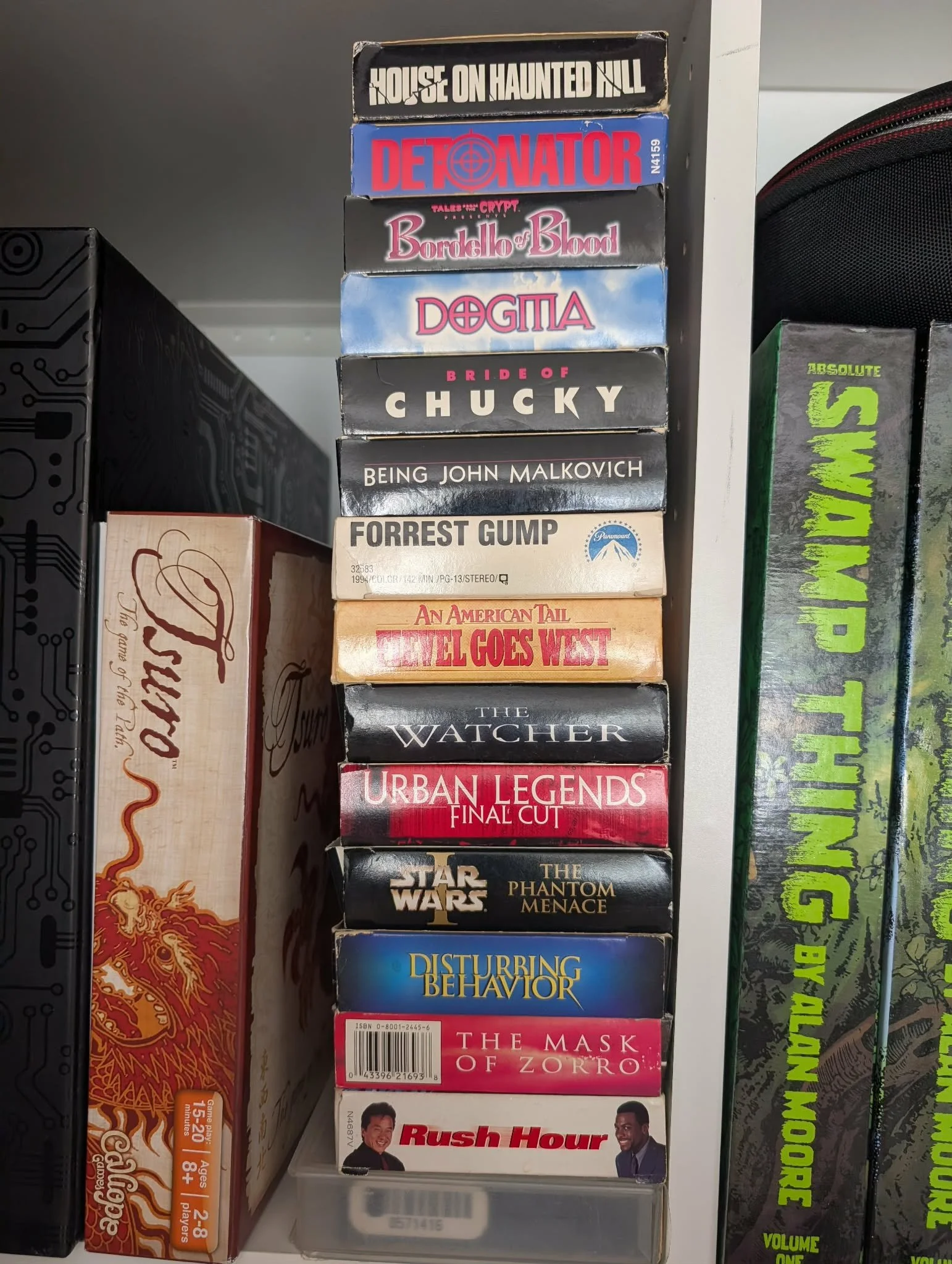
I’ve carried these tapes with me through multiple moves, from New York to Virginia, and although I rarely watch them anymore, I’ve never seriously considered getting rid of them.
It’s not because I think VHS offers a better viewing experience either. These days, I watch most of my movies on an OLED television, often on 4K Blu-ray, and the two formats just don’t really mix.
I tried watching my old VHS copy of Tombstone (1993) on the OLED once, and it just didn’t look right, despite the tape’s reassuring promise that it had been “formatted to fit your screen.” Some things really are better experienced on the equipment they were designed for.
There’s also something to be said for the simplicity of analog technology. VCRs certainly had their problems, but they didn’t need internet connections, software updates, or online accounts. As long as the equipment worked and you had a tape, you could watch your movie.
One thing I still enjoy about revisiting old VHS tapes is the previews that sometimes played before the movie. Those trailers, advertisements, and promotional spots are like little time capsules, capturing what studios were promoting at a certain point in time. I still remember the trailers for Scream 2 and The Faculty that played before the Halloween H20 VHS. DVDs carried on that tradition, and watching those previews years later can be almost as entertaining as the movie itself.
That hasn’t stopped me from occasionally adding to my VHS collection. In recent years, I’ve purchased releases of The Void (2016), Mandy (2018), and Late Night with the Devil (2023) from boutique sellers.
A few years ago, I even brought my copy of The Void and a VCR over to a friend’s house because he had a small CRT television. We made a movie night out of it, watching a modern horror movie on the kind of equipment I’d grown up with. That’s a memory I’ll hang onto.
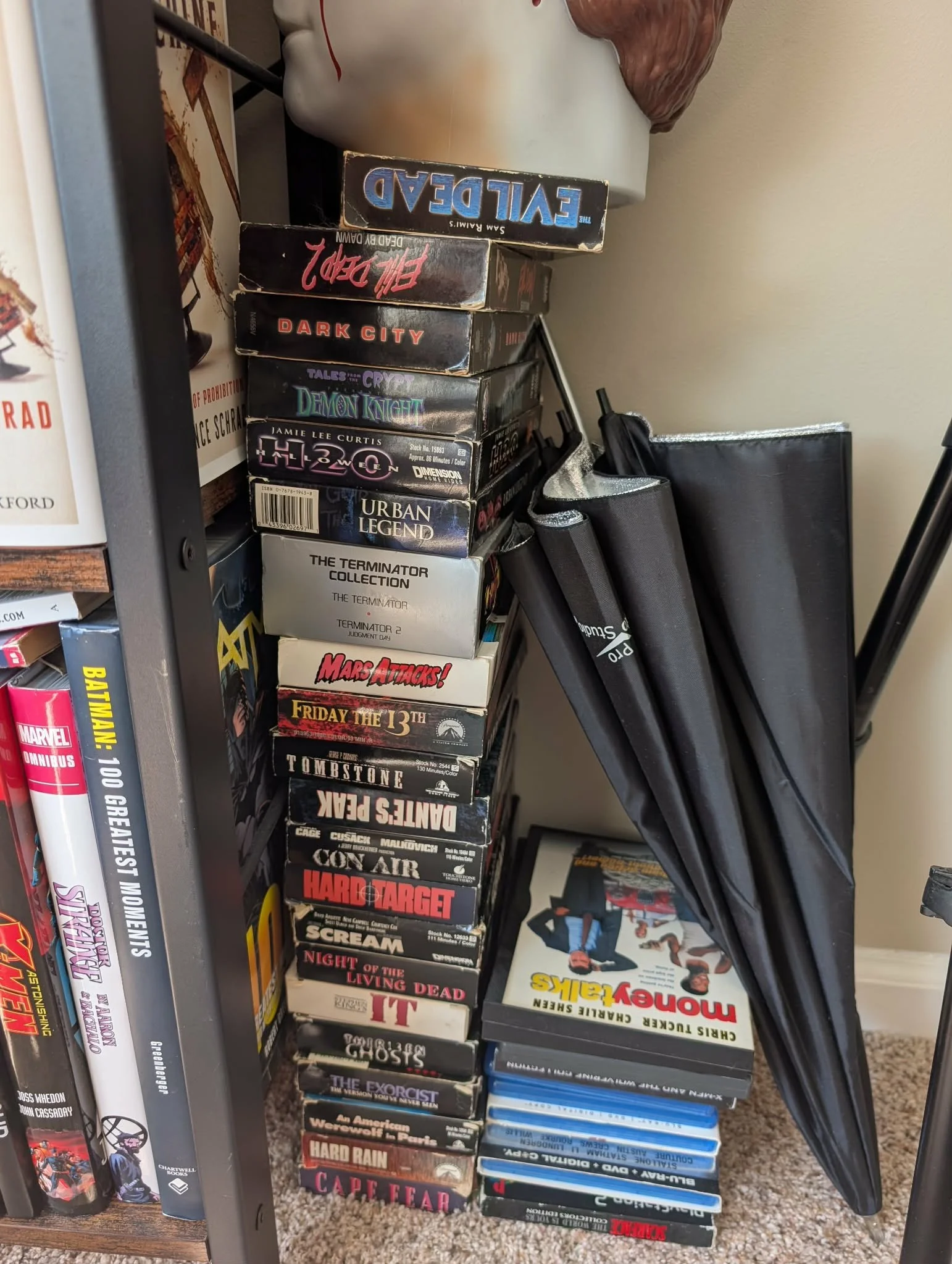
Eventually, I’d like to set up a small corner of my home theater with an old CRT television and a VCR. Nothing elaborate, just somewhere I can occasionally pull a tape off the shelf and watch it the way I did growing up. Maybe even introduce someone else to the experience.
I don’t miss having to rewind movies, adjust tracking, or waiting months for a new release to arrive at the video store, and I certainly don’t miss the picture quality.
What I do miss are some of the rituals that surrounded watching movies. Walking the aisles of the video store, discovering something unexpected, and spending an evening watching movies with family and friends. We had to work a little harder to find what we wanted back then, and there was a certain urgency to it. If you missed something, you couldn’t always count on another opportunity coming along anytime soon. We couldn’t simply turn to a screen for every answer. We had to talk to people, make plans, and figure things out for ourselves. I think that extra effort made us appreciate those experiences a little more.
There are certainly days when I’d trade some of today’s convenience for that sense of connection again. I don’t think we need to give up everything modern technology has made possible, but somewhere along the way, I think we’ve lost a bit of the balance.
Enjoyed the blog? Join the newsletter for monthly movie picks and new releases.